Archive for the ‘iPad/Tablet Computing’ Category

Microsoft Zune, R.I.P.

It has been reported that Microsoft is killing their ill-fated Zune player, allowing the company to focus on other devices. For those of you that didn’t know about the Zune (I’m not surprised), it was Microsoft’s attempt at an iPod. First released in 2006, it never was as easy to use or had the integration with a service like iTunes that made the iPod such a success. It could also be argued that younger demographics see Microsoft as a brand their parents used, not a brand they identify with.

The Zune is just another in a long line of digital media players from a variety of well-known and not-so-well-known companies to fall by the wayside in the last 10 years since the iPod was introduced. The question to ask is if Microsoft couldn’t crack the iPod market, can anybody? And the follow up question is what about the iPhone and iPad markets?

For what it’s worth, the fact that Microsoft couldn’t make inroads against the iPod may be as much of an indictment against Microsoft as it is an indication of Apple’s strength in the market. But the demise of the iPod has been predicted nearly every year by so-called experts in the field and it has yet to happen. So the failure of the Zune isn’t just due to any incompetence on Microsoft’s part, especially when companies like Sony with their Walkman brand had no better results.

Let this be a wake-up call to anyone who is sitting on the sidelines, hedging their bets on the iPhone and iPad. If this story teaches us anything it is that Apple certainly is not a flash in the pan. Those who are waiting (hoping?) for the market to catch up with Apple are letting their competitors who are already leveraging these technologies gain the upper hand.

Keep Reading →

Posted on March 15, 2011 | Posted in iPad/Tablet Computing, Miscellaneous, Smartphones

New iPad Tomorrow?

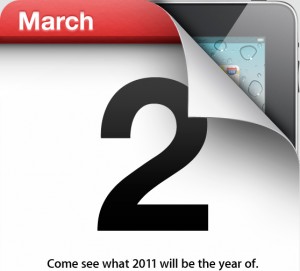
March 2nd InvitationIn case you haven’t heard yet, Apple is holding a “media event” tomorrow, where most likely they will be introducing a new iPad. The media members that were invited to the event were given the invitation pictured. Sort of gives it away, don’t you think? Stay tuned for details once the announcements are made.

Keep Reading →

Posted on March 1, 2011 | Posted in iPad/Tablet Computing

Apple Music Events: They’re Not Just for iPods Anymore

Apple recently hosted their yearly “music event”. As expected, they introduced new iPods. However, this particular event had a lot of little nuggets of tantalizing information. Now that I’ve had some time to digest it all, I’ll be writing a series of articles on these nuggets. However, I thought I’d quickly touch on a few topics.

Steve Wozniak was in attendance. Steve Jobs seemed genuinely surprised and delighted. Does this have any significance? When was the last time Woz attended any official Apple events?

It’s interesting that Apple introduced printing into the upcoming iOS 4.2 update for November. My guess is they got enough complaints about the iPad not being able to print, especially from business users, that they added it into this update. I felt that by not including printing originally, Apple was trying to make a point that the iPad was in many ways a replacement for paper. Perhaps the world just isn’t quite ready for that yet.

Steve Jobs made it a point to emphasize that an iPod Touch is an iPhone without a contract. Why would he do this? If he was simply trying to make clear that the iPod Touch is an iPhone without the phone, it seemed like overkill. It also seemed like he slowed down and wanted to really drive this point home. Was Steve taking a jab at AT&T? Or was he swinging at the entire wireless industry? Or perhaps he was foreshadowing something else altogether.

Apple finally revived the Apple TV at this event. Which is somewhat interesting because Apple calls this their yearly music event. Everything else discussed at this event was music related, yet the Apple TV is obviously geared towards movies and TV shows. It simply could be the fact that this was good timing for Apple to release an updated Apple TV prior to the holiday shopping season. But it could also be a sign that Apple has finally figured out how they want to position the Apple TV. And maybe they feel the mainstream market is now ready to receive the Apple TV in earnest. The next few weeks and months should tell if Apple is really ready to take the Apple TV out of “hobby” status.

Steve Jobs also took a subtle swipe at competing devices. While discussing what consumers have taught them about the Apple TV thus far, he said, “They don’t want a computer on their TV. They have computers. They go to their widescreen TVs for entertainment, not to have another computer. This is a hard one for people in the computer industry to understand. But it’s really easy for consumers to understand. They get it.” This is a good point that I believe has relevance beyond the home media market.

When Netflix announced their app for the iPhone a few months back, I was a little surprised that Apple allowed it, since it seemed to compete with their iTunes movie service. So you can imagine my surprise when Apple themselves announced Netflix support in the Apple TV. Suddenly it seems Apple is very cozy with Netflix. What could this mean?

Finally, there seems to be some tension between Apple and Facebook over Apple’s new Ping social network. I noticed during Steve Job’s speech that Ping showed that you could log in with your Facebook ID. I even mentioned to my wife that this was a great move on Apple’s part. Yet the next day I read reports that this feature was not available. Sure enough, this feature was not available, even though it still mentioned FaceBook on Apple’s web site. Something interesting is going on behind the scenes and I can’t wait to find out what that is.

So stay tuned as I tackle some of these topics in more depth very soon.

Keep Reading →

The Nets are Dragging

Profits from netbook sales are lower than expected. So much so that HP and Dell are significantly reducing their investment in the “10-inch” market. HP reportedly is even considering getting out of the 10-inch business completely. Is this really a surprise when netbooks live in a cut-throat, race-to-the-bottom, low-cost market? People like to point out when certain products cost more than bottom-of-the-barrel options, but they rarely realize that certain markets can’t support themselves at razor-thin profit margins. To quote the article:

Most of the second-tier and white-box netbook vendors have already quit the market after first-tier players started cutting their netbook prices in the second half of 2009 to compete for market share.

What is also interesting is that this news comes right on the eve of the 9.7-inch iPad launch. Could HP and Dell be conceding the 10-inch market to Apple? And if they do, will the 11 or 12-inch markets matter anymore?

Keep Reading →

Posted on April 2, 2010 | Posted in Business, iPad/Tablet Computing, Personal Computing

Don’t Forget the Wii

With all the talk about the iPad and the iPhone, it is easy to forget another technology device that shook up the established markets just a few short years ago. An article I recently read reminded me of this fact. The Wii, rather than catering to the traditional “gamer”, created a device that would appeal to the mainstream. Similar to the way so-called experts downplayed the iPhone and are downplaying the iPad, many gamers chided the Wii’s relatively weaker graphic capabilities and simplified controllers. Of course, their viewpoints were narrowly focused and didn’t take into account that the Wii would redefine the gaming market. The rules of the Old World don’t apply in the New World. The following quote from the article, “Is casual gaming destroying the traditional gaming market?”, sums this up:

The big videogame console makers and developers catered to performance-oriented customers who demanded more and better and who were repeat buyers. Then in 2006, Nintendo’s inexpensive Wii console came along, emphasizing accessible game play over elaborate scripts and point harvesting. So far, Nintendo has sold 28 million units of the Wii in the U.S., while Microsoft (MSFT) has sold just 19.4 million Xbox 360s and Sony (SNE) 11.7 million Playstation 3s—despite both launching before the Wii.

The parallels between the Wii and the iPhone (and it seems with the iPad) are almost eerie. New World technology shakes up the Old World markets and most of the people who are experts in the Old World seem completely caught off guard.

Keep Reading →

Posted on March 17, 2010 | Posted in iPad/Tablet Computing, Miscellaneous

Less is More

I just read an article that nicely sums up why, regardless of what the technocratic elite believe, the iPad will be a huge hit with mainstream users. It’s the KISS theory – Keep it Simple Stupid. It doesn’t matter how powerful a tech device is – if it is not simple, people won’t be able to harness that power. The iPhone changed the world not just because how powerful it was, but because it was the first smartphone that an average person could pick up and understand how to use almost immediately.

Hey, I get it. The fact that non-technical users are being empowered to use technology with little need for assistance is very threatening to many of those who make a living from or pride themselves on their technology knowledge. To those I say: “Welcome to the New World. Adapt and Survive.”

Keep Reading →

Posted on | Posted in iPad/Tablet Computing

IDC Nailed It!

I just realized that I posted an article back on December 6th where research group IDC predicted that technology spending would increase in 2010 in part due to “… the arrival of Apple’s iPad tablet computer.”

Kudos to IDC for nailing the product AND the name exactly – and kudos to me for picking up on this article :)

Keep Reading →

Posted on February 27, 2010 | Posted in iPad/Tablet Computing

Speaking of Strikeouts …

As I mentioned in part 3 of my iPad series of articles, many commentators were downplaying the iPhone prior to its introduction. I stumbled upon this article from 2007, titled “Apple should pull the plug on the iPhone“. It is a classic example of the type of old world thinking that still predominates the technology industry today. After the runaway success of the iPhone this article reads like a parody. It includes such gems as:

“It’s the loyalists who keep promoting this device as if it is going to be anything other than another phone in a crowded market.”

“…the mobile handset business. This is not an emerging business. In fact it’s gone so far that it’s in the process of consolidation with probably two players dominating everything,”

“During this phase of a market margins are incredibly thin so that the small fry cannot compete without losing a lot of money.”

“As for advertising and expensive marketing this is nothing like Apple has ever stepped into. It’s a buzz saw waiting to chop up newbies.”

“… phones go in and out of style so fast that unless Apple has half a dozen variants in the pipeline, its phone, even if immediately successful, will be passé within 3 months.”

“…its survival in the computer business relies on good margins. Those margins cannot exist in the mobile handset business for more than 15 minutes.”

“If it’s smart it will call the iPhone a “reference design” and pass it to some suckers to build with someone else’s marketing budget.”

(This last comment is very interesting in light of what Google is trying to do with the Android.)

Apple’s track record since the return of Steve Jobs has been to introduce revolutionary devices into stagnant markets. This author assumed that the iPhone was just going to be another me-too phone. He failed to have the foresight that the iPhone was going to change the rules of the how the game was played. The iPhone was such a breakthrough device that it completely transformed the cell phone market. Now, this same author is writing articles such as “Apple’s iPad is far from revolutionary“, with the same type of logic that he used with the iPhone article referenced above. I guess some people will never learn.

Keep Reading →

Posted on | Posted in iPad/Tablet Computing, Smartphones

Apple iPad – Home Run or Strikeout? Part 3: Criticism

If you have been following the coverage of the iPad announcement, you will have noticed quite a bit of negative commentary regarding the iPad – along with the positive reviews to be sure. Some people are surprised by this, considering all the hype leading up to the iPad introduction. Certainly, many more people now pay attention to the tech market than they did when the iPhone was introduced. They likely don’t recall the same type of negative press that the iPhone received 3 years ago. Now, as then, most of the negative remarks seem to be coming from people who are not the apparent target market of the new device or who simply don’t get what the new device, in this case the iPad, represents.

I’ll admit that as the iPad was being introduced, I was disappointed that it would not run Mac OS X applications. I was hoping the iPad would be a hybrid Touch OS/Mac OS X device. That was the technical user in me doing the thinking. But as I kept listening and began to grasp what the iPad could do and how people will make use of it, I realized that this was not a real issue at all.

The first thing to understand is that the iPad is not going to be a suitable replacement for many users’ desktop or laptop computers. It should be pretty clear that the iPad is a new type of device. While it is a computer, it is not a “general purpose” computer like we know today, but rather more of an “appliance”, as I described in my previous article. For most users, the iPad will do everything they need and a lot of what they want. But for other users, especially highly technical users, the iPad can not (at least not yet) do everything they need and want.

Now keep in mind that these types of users are not the target market of the iPad. However, they are the ones complaining the loudest about the iPad. Because users who are more technically-inclined are also more likely to write articles or post complaints on the Internet, it seems to slant a lot of the coverage of the iPad in a negative fashion.

The same thing happened with the iPhone. A lot of commentators downplayed the iPhone and many technical users focused on perceived flaws of the phone. Of course, none of that mattered as the mainstream public fell in love with the device and the rest is history. It seems very likely that the same thing is going to happen with the iPad, especially considering that the new device already has the momentum of the iPhone, iPod Touch, and the Apple App store to begin with.

Ironically, many of the technical users who are complaining about the iPad simply don’t get what the iPad can represent to them. These users appear to have the perception that Apple is trying to convince them to replace their existing computers with iPads. As I explained above, this isn’t the case. And by taking this attitude, they are blinding themselves to a very important idea. The iPad can be a great augmentation to their existing technology – if not for themselves, for their families. Consider a household with a general purpose computer for the more technical needs of a family and then a few iPads for the rest. The iPads can be picked up for quick use, satisfying the Internet needs and other digital media functions that most average users need a computer for. I predict that even highly technical users will begin to appreciate the iPad for those impulsive computing needs where their desktop or even laptop is not convenient or accessible.

For example, my wife and I for years have talked about some sort of computing device that would live in our kitchen. We often have wished we could look up recipes while in the middle of meal-making. While a laptop can sort of fill in that need, it is not an ideal device to have in a kitchen environment. Aside from the risk of spilling food or liquid on an expensive device, the keyboard and mouse interface is simply not convenient when your hands are busy preparing food. Consider an iPad that is mounted on some sort of arm and/or protected in a food-proof case similar to what is available for iPhones. This could be exactly the device we’ve been waiting for. Certainly I am a highly technical user. I’m not considering replacing my laptop with an iPad. However, I can certainly see myself using an iPad in many situations, such as the one I describe in the kitchen.

Finally, there are those users who are going to resist change for any reason and fight tooth-and-nail against it. While I don’t agree with their viewpoints, I can understand that many people feel threatened by change and also the idea that much of the knowledge they posses in the current computing environment may be made irrelevant by new advancements. I could write a great deal about this, but instead I direct you to this article that sums up my thoughts on the topic almost exactly. The author basically lays down an argument that the “old world” of computing (i.e. computers as we know them today) are giving way to a “new world” of computing (in which he basically describes my idea of appliance computing). I especially like the way he describes that new world computers are focused on the 80% of the 80/20 rule. This is precisely why the iPad will be successful. The 80% will love the device, no matter how much the 20% complain about it. I highly encourage you to read this article.

So bottom line, if you hear or read negative comments about the iPad, keep in mind the viewpoint of the commentator. Are they a technical user who fits the above profile I describe? If so, take what they say with a grain of salt. While it is often a good idea to listen to people who have more knowledge about a particular topic, in this situation their old world 20% viewpoint may not be relevant if you are a new world 80% user.

Keep Reading →

Posted on February 22, 2010 | Posted in iPad/Tablet Computing, Personal Computing

Apple iPad – Home Run or Strikeout? Part 2: Dawn of the Appliances

I’ve talked to many people over the years about my vision for the future of computing. In a nutshell, I feel that the computers of today are entirely too complex. Advancements in technology will allow computers to evolve into much simpler devices. I’ve used the term “appliance” to describe these simpler future computers. I believe appliance computers will be more like information portals than the general purpose personal computers we have today. Like the appliances we think of today, future appliance computers will be ubiquitous, they will serve more specific functions, and most importantly they will be extremely easy to use and much more reliable. Apple has certainly started down this road with the Apple TV, iPhone, and iPod Touch. Now, I believe the iPad will be the first device that will firmly begin to entrench the idea of appliance computing into the mainstream.

What makes the iPad more like an appliance than a PC? As I mentioned in part 1 of this series, the size, weight, and long battery life of the iPad make it already seem like an appliance from the future. Because iPads won’t be sitting on a desk like a desktop PC, or need to be attached to a charger for long periods of time like a laptop, the iPad will be a lot more accessible to their users – similar to appliances of today. Additionally, the streamlined Touch operating system of the iPad make means users will be using it in a more concise manner. I think users will pick up their iPads to perform fairly tasks at hand – again like an appliance. Finally, we expect reliability from our appliances and believe they will simply work when we need them. We don’t put up with “crashes” or odd behavior from appliances like we’ve become accustomed to with computers of today. The fact that the iPad does not have hard drives or fans will make it more reliable from a hardware standpoint and again the Touch OS ensures reliability from the software side. I don’t expect that the iPads will be “perfect” from a reliability standpoint, much as the iPhone and iPod Touch are not perfect, but compared to most computers of today, they are extraordinarily reliable.

By my criteria, appliance computers need to be ubiquitous. I believe the iPad will almost undoubtedly see widespread adoption. The low cost of the iPad and momentum that Apple has from the iPhone and iPod Touch will almost certainly assure that the iPad will gain a foothold in the market. I expect that early adopters will form lines at Apple retailers just like with the iPhone. From there, I believe the iPad will start eating into the low-end of the personal computing market – but not just in the netbook/laptop market. I think the iPad will also put dents into the low-end desktop market. Why would “grandma” spend $500 for a cheap desktop PC along with all the cables and complexity (not to mention low-quality) when she can spend $500 for an iPad? She’ll be able to do everything she wants and more in a simple device that doesn’t take up a lot of room and can be carried all around the house.

In addition, I can see that the iPad will grow the overall market of personal computing devices. The trend is already for multiple computer households. The demands of kids and family members to get access to the Internet have pushed the growth of multiple computer families. However, multiple computers means significantly higher complexity. The low cost and simplicity of the iPad will allow families to buy and make use of multiple iPads a lot easier than they can buy and setup multiple desktop or laptop computers. Many families who will not purchase multiple computers will purchase multiple iPads. This will allow the iPad to grow the computing market in a way the PC of today can not.

What I see for the future is the desktop and laptop computer as we know them shrinking into niche products. I can see that many homes will have probably just one main desktop or laptop computer (if needed) along with several iPad-like devices. As the iPad improves, it is entirely conceivable that the market for the general purpose computer of today will shrink down to only graphic artists, engineers, computer software developers, photographers, videographers and other highly technical users. This won’t likely happen overnight, but I feel the landscape of the computer market in the next five or ten years will be significantly slanted towards appliance computers like the iPad.

Of course, this transition won’t come without significant grumbling from those who are invested in the PC market of today. Not surprisingly, those are the people who are already downplaying or criticizing the iPad – just like they did the iPhone. I will respond to those criticisms in part 3 of this series, coming soon.

Keep Reading →

Posted on February 16, 2010 | Posted in iPad/Tablet Computing, Personal Computing

 Page 2 of 3 « 1  2  3 »

State of the Tech Archives

  • Tech Toy of the Month: Solid State Drives May 2, 2012
    If you normally do not read my Tech Toy articles, be sure to read this one! This Tech Toy is a little different in that I am highlighting not a single product, but an entire class of technology. I am choosing to highlight this technology now because it has finally matured to where it makes […]
  • The Top Ten Technologies You AREN’T Using … But You Should Be May 2, 2012
    Marcel Brown Technology Services celebrated 10 years of business in April! Looking back on these 10 years, technology has changed more so than at any other time in history. Right before our very eyes, we are witnessing the end of the 30+ year PC era. Where only big companies could fully leverage the Old World […]
  • It’s Hip to Be Square March 27, 2012
    Having run a small business for 10 years now, I am very aware of the challenges that small businesses face. One of those challenges is offering the ability to accept credit cards. Many small businesses would like to accept credit cards, but the reality is that most credit card processing companies make it financially difficult […]
  • Which iPad is Right for You? March 27, 2012
    Unless you’ve been living under a rock, you know that Apple has just released the 3rd generation of the iPad, which they are simply calling the “new” iPad. What you may not know, however, is that Apple has kept around the 2nd generation of the iPad, known as the iPad 2, in 16 GB capacity […]